McMurtry Spéirling: back-calculating what the fan system is really doing

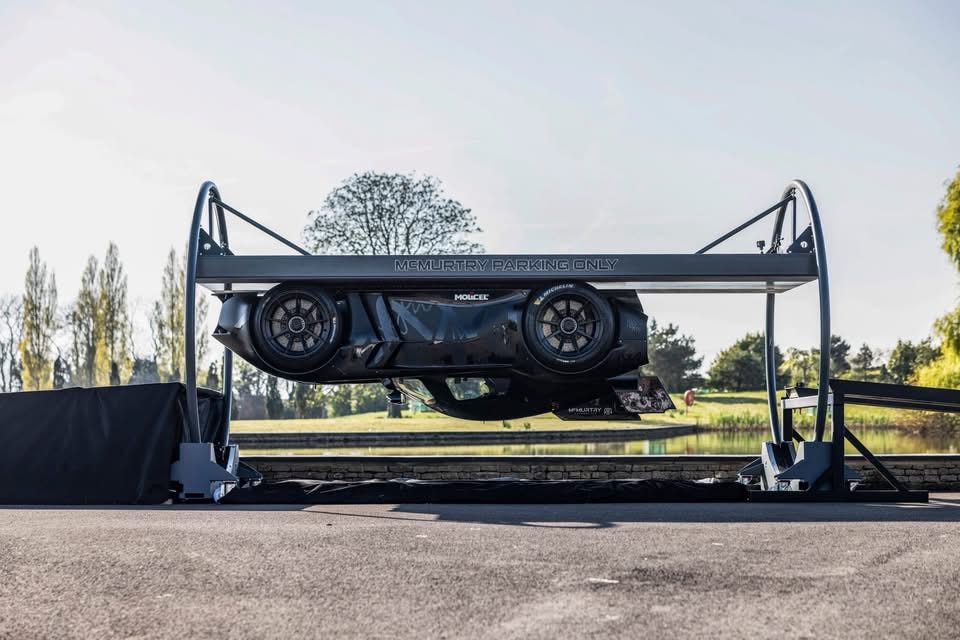
I’m currently gearing up to release a new series on interesting race car aerodynamics, so I thought I’d whet people’s whistle with this - a reverse engineering exercise I did a while back on how the amazing McMurtry Spéirling fan car’s suction system works.
Enjoy!
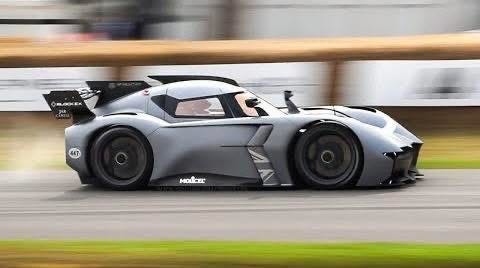
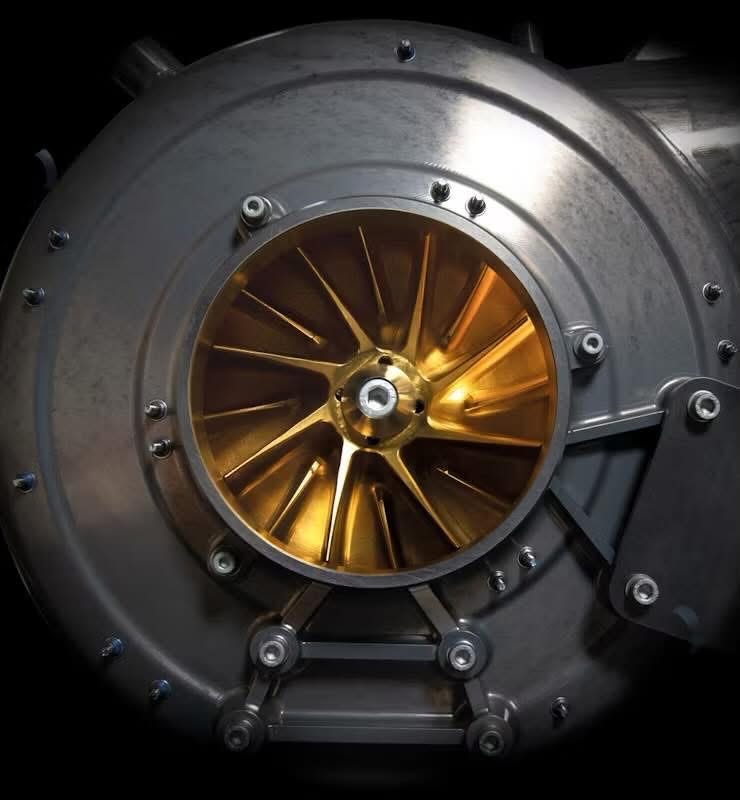
The McMurtry Spéirling’s twin centrifugal fans aren’t magic. You can actually back-solve what they’re doing from the public data.
What’s known:
• Downforce: about 2,000 kg (4,409lb) at zero speed
• Total fan power draw: around 50–60 kW (about 67–80 hp)
• Effective under-floor area: about 1.5 m² (16.1 ft²) from Kyle.Engineers (F1 Aerodynamacist) YouTube channel
• Standard air density assumed…
The system calculations:
1. Average pressure under the floor
Downforce divided by floor area gives the mean static depression.
Δp = F / A = 4,409 lb / 16.1 ft² = 274 lb/ft²
1 in H₂O ≈ 5.2 lb/ft², so Δp ≈ 52.6 in H₂O
That’s roughly 1.9 psi of vacuum spread across the whole floor.
2. Dynamic pressure for reference
At 100 mph, dynamic pressure q = 0.00256 × V² = 0.00256 × 100² = 25.6 psf.
Convert to inches of water: 25.6 / 5.2 = 4.9 in H₂O.
In other words, at highway speed, normal aerodynamic pressure under a car is only about five inches of water.
3. Suction ratio
S = Δp / q = 52.6 / 4.9 ≈ 10.7
So the Spéirling’s sealed system multiplies the available aerodynamic pressure by roughly ten at 100 mph, and it can do that from a standstill.
4. Back calculation sanity check
Δp × 5.2 × A = 52.6 × 5.2 × 16.1 ≈ 4,409 lb.
It’s nice when you can reproduce your numbers!
5. Quick efficiency marker
Pressure per input power: Eₚ = Δp / hp = 52.6 / 66 ≈ 0.8 in H₂O per hp.
For every horsepower of fan power, the system maintains almost one inch of water vacuum across the under-floor. For that size of fan, that’s pretty impressive.
Airflow and power:
The pair of fans on the Spéirling move about 3,200 CFM total.
Assuming 40 percent total efficiency,
hp = (Δp × Q) / (6356 × η)
= (52.6 × 3,200) / (6,356 × 0.40) ≈ 66 hp total
That fits neatly with the published 50–60 kW draw. Each fan handles about 1,600 CFM and draws roughly 33 hp.
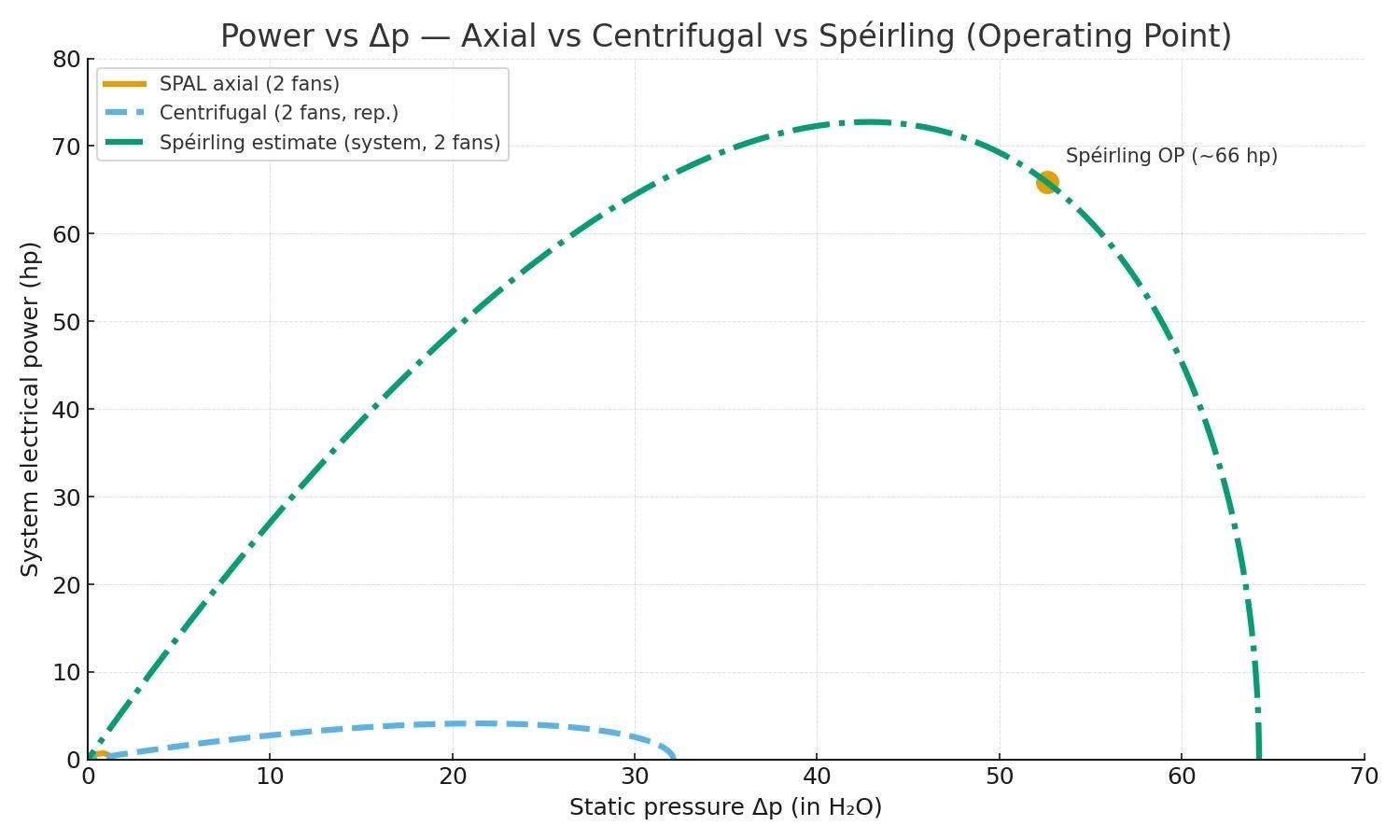
What does the Fan Curve look like?
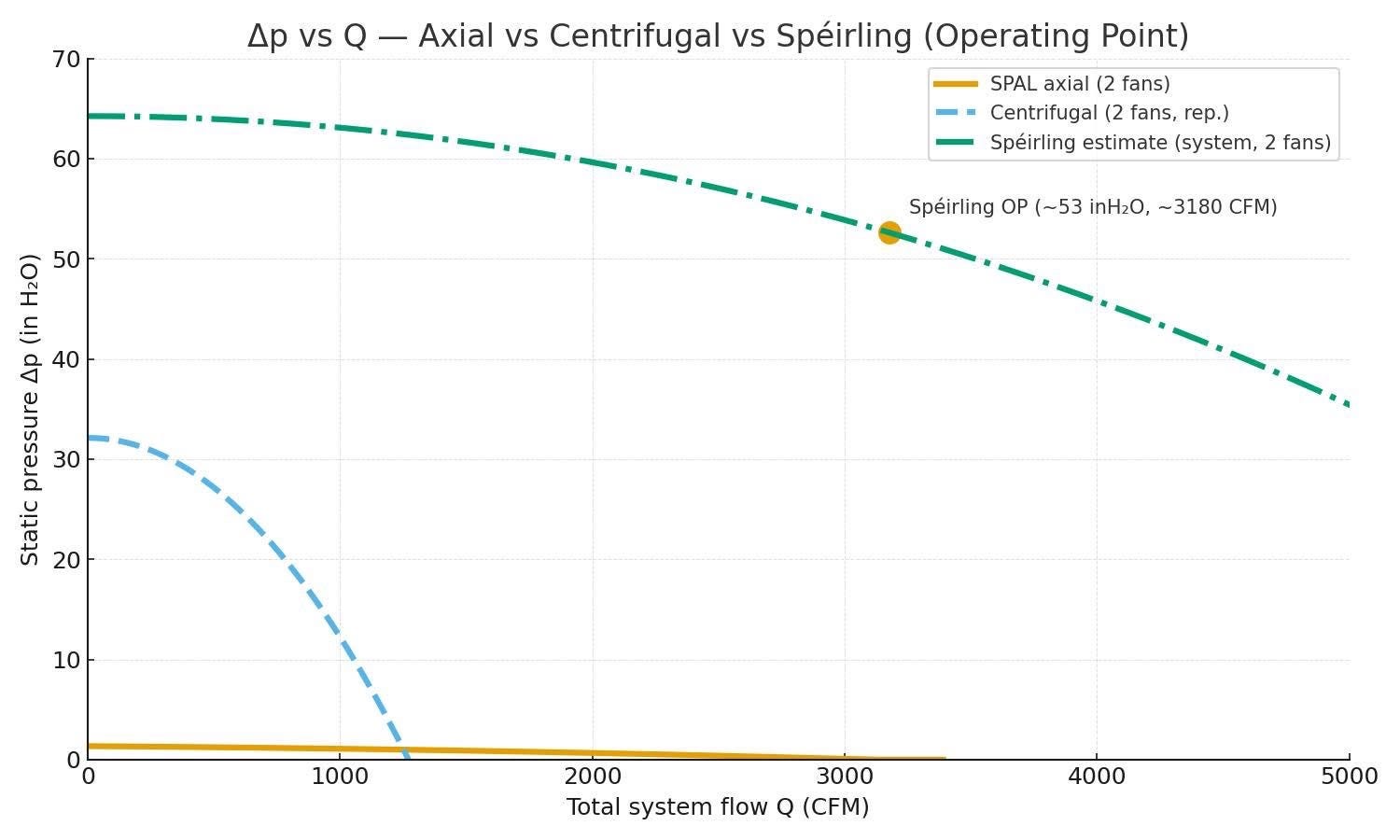
Summary:
At a stop, air around most cars just sits there. The Spéirling makes its own. Two relatively small centrifugal blowers pull a 52-inch-water vacuum under the chassis, about 275 lb/ft² (roughly 2PSI) across the floor. That’s how it makes 4,400 lbf of downforce without moving an inch.
At 100 mph, the natural aero pressure under the Spéirling is only about five inches of water, a tenth of what the fan system produces. The Spéirling packs an entire racetrack’s worth of aerodynamic load into the few square feet under one car.
The Spéirlings fan system is sealed, actively regulated, and reliable enough to drive with confidence at lap times faster than some F1 cars, depending on the course.
There’s nothing mystical about it. Just math, power, cubic dollars and pressure working together exactly the way they should. The sealing system the car has on the other hand IS a bit mystical, but that’s a story for another article!